The Right Kind of Wind: Raising Antifragile Teens
6 January 2026 — Written by Raaji Naveen
Why Haidt is Right, and Why We are Getting Him Wrong
A group of adults once tried to build a perfect world.
Not metaphorically. Literally.
They engineered an enclosed ecosystem called Biosphere 2. Inside it, everything was controlled. Temperature. Water. Light. And yes, even the absence of trouble. The trees grew fast. Straight. Tall. Impressive, in that showroom way.
Then something odd happened.
Some of those trees fell over.
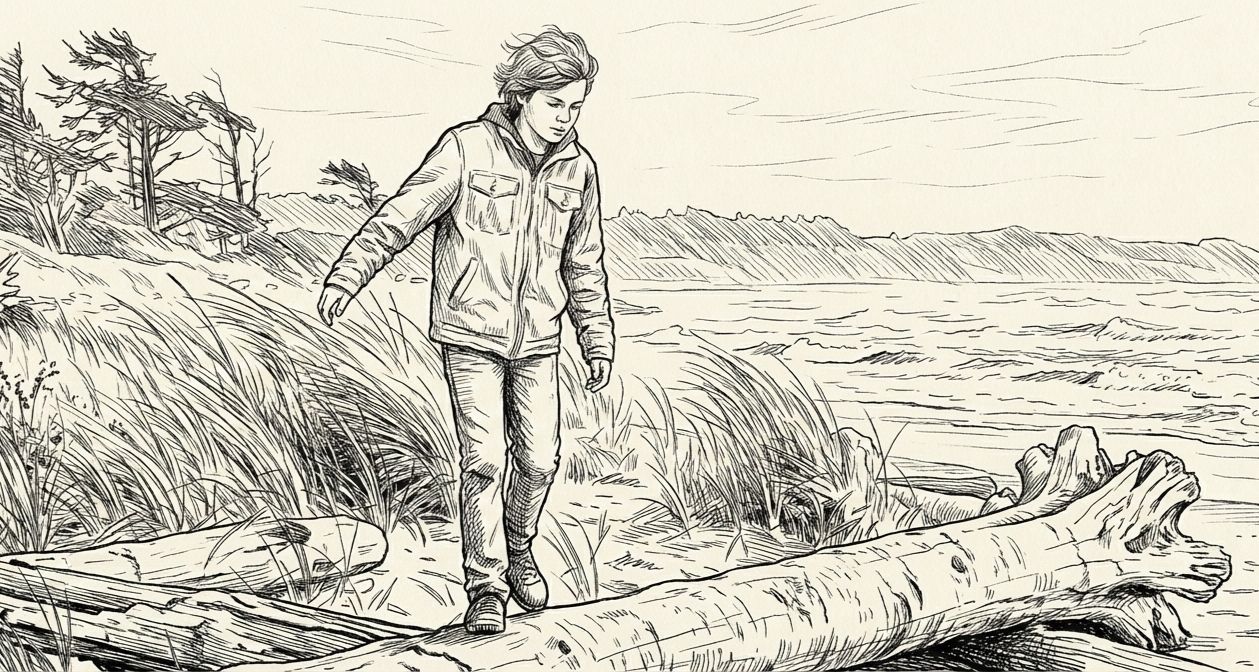
Not because they were diseased. Not because they were neglected. They fell because they had never met wind. When wind never visits, roots never negotiate. Trunks never learn to flex. Strength never gets invited to form. (Haidt uses this story to make a larger point about childhood and the conditions that quietly shape fragility.) The Guardian+1
That image has stayed with me because it is painfully relevant to how many of us are raising teenagers today.
We have become excellent at removing the breeze, and oddly comfortable manufacturing the storm.
What Haidt is actually saying
Jonathan Haidt’s argument is often simplified into a clumsy slogan: kids need stress.
That is not quite it.
What he is pointing toward is something more precise and more demanding: children need the right stressors.
Not crushing pressure. Not chronic fear. Not a life of constant evaluation.
They need age appropriate friction, the kind nature quietly provided for generations:
- the scraped knee from climbing
- the awkward quarrel with a friend
- the disappointment of losing a game
- the boredom that forces invention
- the task that must be attempted again, and again, until it works
These experiences do not damage a child. They educate a child.
And here is the uncomfortable twist: we removed many of these everyday stressors, then replaced them with stressors that have no wisdom in them.
The winds we removed, the storms we engineered
We quietly reduced real world independence, real world free play, and real world responsibility. At the same time, we intensified performance metrics and adult anxiety.
So childhood became calmer on the surface, and harsher underneath.
We replaced natural difficulty with manufactured difficulty:
Natural wind (builds capability):
- manageable risks
- social repair after conflict
- trying, failing, trying again
- decision making with consequences
- effort that belongs to the child
Engineered storm (builds anxiety):
- exam stress as a lifestyle
- performance stress as identity
- perfection stress as proof of worth
- adult rescue that teaches helplessness
- constant monitoring that teaches self doubt
This is what I mean when I say we are doing the wrong things rightly.
We are protecting. We are planning. We are providing.
But the child is still falling over inside, because nothing in them had to anchor.
A useful word: antifragile
Haidt uses a concept popularised by Nassim Nicholas Taleb: antifragile.
Resilient things survive shocks. Antifragile things improve because of them.
Haidt and his co authors make this claim sharply: children, like many complex systems, need challenge within limits. Remove all challenge, and you do not create safety. You create fragility. coddling
In other words, if we treat young people as if they are made of glass, they may start living like glass.
And glass lives in fear of life.
The parenting temptation nobody talks about
Most of us are not trying to raise anxious children.
We are trying to raise unharmed children.
The instinct is tender. The instinct is love.
But love can become a kind of over function. We step in early. We negotiate on their behalf. We smooth the road. We pre explain the teacher. We protect them from the discomfort of being misunderstood, excluded, corrected, or simply bored.
Then one day we look up and wonder why confidence is missing.
It is missing because confidence is not taught through reassurance.
Confidence is built through lived proof: “I handled that.”
What the right kind of wind looks like in everyday life
If you are a parent, here are a few grounded ways to offer wind without throwing your child into a storm:
Let small problems stay with them longer. Not forever. Just long enough for them to attempt a solution.
Stop pre rescuing social discomfort. Support them after the fact. Do not choreograph the scene before it happens.
Give them domains they fully own. A commute, a purchase, a project, a plan, a weekly responsibility that is genuinely theirs.
Normalise boredom. Boredom is often the front door to imagination.
Praise strategy and stamina, not outcomes. Outcomes are noisy. Effort is information.
Protect sleep and play like they matter. Because they do.
Trade surveillance for check ins. Monitoring signals mistrust. Conversation builds inner supervision.
Haidt’s wider work, especially in the context of the phone based childhood, argues for more independence and free play in the real world, not less. Anxious Generation+1
What we try to do at Beyond 8
At Beyond 8, we think about “safe space” in a particular way.
Safe does not mean frictionless. Safe means supported.
It means a teenager can attempt something real, fail at it, reflect, and attempt again without being shamed, labelled, or rescued out of the learning.
It means adults stay close enough to guide, and far enough to let ownership form.
We cannot give a young person self-trust by handing them comfort.
We can help them build self-trust by handing them experiences, with steady human presence beside them.
Key takeaways
- Children do not need more pressure. They need better difficulty.
- Remove every natural stressor, and you do not get peace. You get fragility. coddling
- The goal is not toughening kids up. The goal is letting strength assemble itself.
- A childhood with the right resistance builds grounded, self-trusting young people.
Because children, like trees, do not grow strong in still air.
They grow strong when life gives them a little wind to lean against.
And when we dare, lovingly, to step aside and let that wind do its work.
FAQ (for parents who are thinking quietly)
Does this mean children need stress? They need stressors within limits, not chronic pressure. The difference matters.
How do I know if something is healthy wind or harmful storm? Healthy wind is temporary, recoverable, and teaches capability. Harmful storm is chronic, identity threatening, and teaches fear.
Is free play really that important in the teen years? Yes. Independence, unstructured time, and real world responsibility are central to healthy development, not optional extras. Anxious Generation+1
What if my child already feels anxious? Start smaller. Wind can be gentle. The aim is not exposure for its own sake. The aim is agency, with support.

