Have We Forgotten the Most Important Person in Education?
9 January 2026 — Written by Raaji Naveen
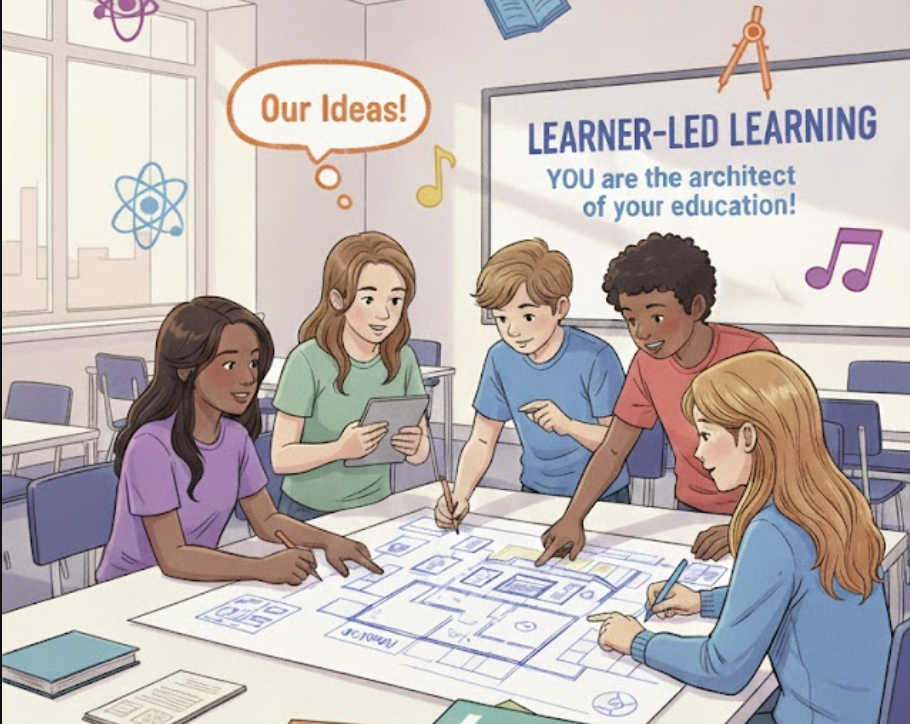
Have We Forgotten the Most Important Person in Education?
A few years ago, I watched a five-year-old discover magnets.
Not “learn” magnets. Discover them.
He hovered over a tray of paper clips like a scientist who had stumbled upon a private miracle. He tried, failed, tried again. His face held that rare kind of seriousness children wear when they are free.
No one had to tell him to pay attention. Attention arrived on its own.
And then—almost without us noticing—something changes.
By the time many children enter high school, we stop asking what they are curious about and start asking how quickly they can comply.
We do not say it that bluntly, of course. We say:
- “Boards are coming.”
- “These marks matter.”
- “Be future-ready.”
- “This is what colleges want.”
All reasonable. All well-intended.
And yet, in all this noise, it sometimes feels like we have misplaced the very reason schools exist.
The learner.
When learning becomes a means, not a life
In the early years, we celebrate exploration. We tell children to wonder. To play. To learn at their own pace.
Somewhere around high school, curiosity is often replaced with choreography.
Learning—once joyful, once alive—becomes a means to an end:
- the rank
- the seat
- the job
- the “safe” pathway
And the tragedy is not that teenagers face hard work. Teenagers can do hard things.
The tragedy is that much of the hardness is pointless.
Not “challenging” in the way a good book is challenging. Not “difficult” in the way a real project is difficult.
Pointless in the way a checklist is pointless when it forgets the human it was meant to serve.
A quiet design flaw in conventional schooling
Most conventional schools march to timetables designed for convenience, not curiosity.
Lessons are delivered when the adult is ready, not when the learner is interested. Topics move forward because the calendar says so, not because understanding has arrived.
And what we often call “learning outcomes” can become polite disguises for something else: coverage.
Coverage is not learning. Coverage is movement.
Learning is change: in thought, in skill, in confidence, in the ability to make sense of the world.
Teenagers, more than anyone, can smell the difference.
They know when they are learning… and when they are simply being taught.
The question we avoid asking
Here is the uncomfortable question that sits behind many report cards:
Are our learners learning, or just being taught?
Because a child can be taught and still not learn.
They can reproduce answers and still not understand. They can memorise definitions and still not care. They can score well and still feel strangely empty about the process.
We call it success. They experience it as survival.
What “learner-centered” actually means in high school
Learner-centered education is often mistaken for “do whatever you feel like.”
That is not what I mean.
Learner-centered education means the learner is treated as a person, not a product.
It means:
- Curiosity has standing. It is not a distraction. It is a signal.
- Pace is designed, not imposed. Not slow. Not fast. Right.
- Understanding comes before performance. Because performance without understanding is a party trick.
- Agency is practiced. Teenagers make choices and live with the results, with adult guidance—not adult takeover.
- Learning connects to life. Not someday-life. Current-life.
In one line: the learner is not the passenger in their education. They are the driver, with adults as navigators.
What schools can do without changing the entire system
You do not need a revolution to begin. You need a redesign.
Here are small shifts that make a large difference:
Start units with questions, not chapters. Let the learner’s questions pull the curriculum forward.
Make “student voice” a practice, not a poster. Short weekly check-ins: What helped you learn? What blocked you?
Use assessments as feedback, not judgement. More drafts. More reflection. Fewer one-shot verdicts.
Build time for deep work. Less switching, more focus. Teen brains need immersion to care.
Give teenagers real responsibilities. Not “leadership badges.” Real ownership: roles, projects, outcomes.
Teach learning itself. How to study, plan, revise, ask for help, manage attention, recover from failure.
These are not expensive. They are intentional.
Where Beyond 8 fits in this conversation
At Beyond 8, we keep returning to a simple premise:
If the learner is the most important person in education, the design must prove it.
So we try to build high school around:
- steady mentorship
- meaningful work
- real-world learning
- room for choice and responsibility
- a tribe where teenagers can be known, not just measured
Not as an escape from rigour, but as a return to meaning.
Because rigour without purpose is just pressure wearing a suit.
Key takeaways
- High school often swaps curiosity for compliance.
- Timetables and “coverage” can crowd out real understanding.
- Learner-centered does not mean easy. It means human.
- The question worth asking is simple: Are learners learning, or just being taught?
And perhaps the most urgent work in education right now is not adding more content.
It is remembering the person.
FAQ
Is focusing on the learner the same as lowering standards? No. It often raises standards—because learners engage more deeply when they understand why they are doing the work.
What is the difference between teaching and learning? Teaching is what adults do. Learning is what changes inside a learner: understanding, capability, judgement, confidence.
How can parents support learner-centered learning at home? Ask better questions: “What did you find interesting today?” “What felt pointless?” “What would you change about how you studied?” Help them reflect, not just perform.
Can conventional schools become more learner-centered without changing boards? Yes. Boards define exams. They do not have to define the entire experience of learning.

